The Port of Gdansk ended 2025 with strong figures
The year 2025 turned out to be another period of dynamic development of the Port of Gdansk. It was the handling of general cargo and containers that drove the record figures. While at the same time, infrastructure investments continued, strengthening the position of the port in the Baltic Sea region as a logistics hub ready to handle the growing demand for specialized port services.
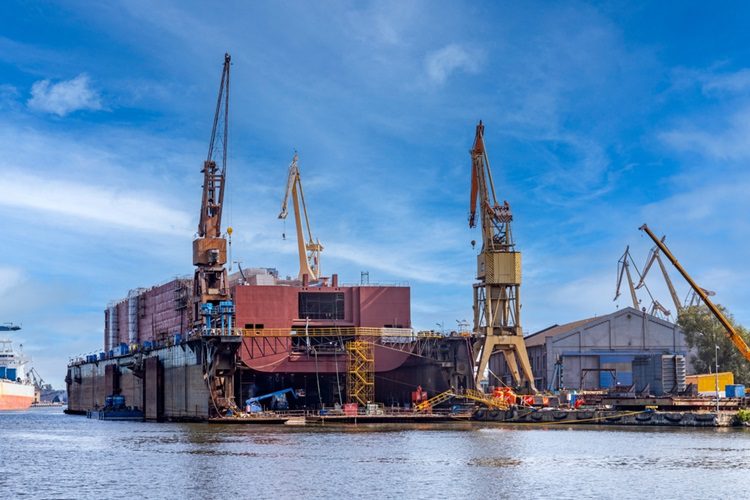
The total volume of transshipments in the Port of Gdansk in 2025 reached 80.4 million tons, which means an increase of nearly 4 percent. compared to 2024, when 77.4 million tons were handled. The largest part of this traffic is still liquid fuels, which remain the foundation of the port’s operations, and at the same time the importance of general cargo and containers is growing, testifying to the growing diversity of the port’s services.
Liquid fuels – a stable foundation
The largest cargo group, liquid fuels, reached a volume of 39.6 million tons in 2025, which means an increase of 0.4 percent. compared to the previous year and accounts for 49.3 per cent. of the ports total transhipments. Of particular importance is the Naftoport terminal, which handled 37.4 million tons of crude oil compared to 36.6 million tons in 2024, receiving 379 ships with oil and 84 vessels with petroleum products. These results show the growing capabilities of the port in terms of fuel handling and accompanying services, including those for foreign customers.
General cargo – rapid growth of this segment
The year 2025 confirmed the growing importance of general cargo in the port handling structure. Its volume increased from 23.3 million tons in 2024 to 27.2 million tons, which means an increase of 16.6 percent. General cargo is currently responsible for 33.8 percent. of all transshipments, and the dynamic development of this segment is supported by the export of Polish logistics and transport services, including the handling of containerized general cargo.
Containers – a record year
The container segment developed extremely dynamically. Nearly 2.8 million TEUs were handled in port terminals, i.e. by 23 percent. more than the year before. The Baltic Hub Container Terminal handled 2,766,475 TEUs, and the weight of container cargo increased by 18 percent. to 24 million tonnes. These results show the potential of the port in terms of container handling both for the domestic market and for the export of logistics services.
Dry bulk loads – differentiated results
In the dry bulk cargo segment, the results were mixed. Coal transshipments decreased by 10.8 percent. to the level of 7 million tonnes, and its share in the structure of total transshipments decreased to 8.7 per cent., reflecting changes in the national energy mix. On the other hand, ore transshipments increased by 12 percent., reaching 326.7 thousand tons, and the volume of other dry bulk cargo increased by 8.5 percent. to 3.7 million tonnes. The largest declines were recorded in wood (-56.5 per cent., to 31.2 thousand tons) and grain (-14.8 percent., to around 2.5 million tonnes).
Ro-ro and passenger traffic
In 2025, transshipments in the ro-ro segment decreased – the number of vehicles handled decreased by 15 percent., reaching 118 thousand units. At the same time, the passenger segment developed steadily, serving 171.4 thousand passengers (+3.1 percent year-on-year). During the year, 266 ferry calls and 57 cruise ship calls were recorded, which confirms the continuing interest in tourism and transport.
Investments – preparing for an increase in demand
The Port of Gdansk continued to implement infrastructure investments of importance for the entire Baltic Sea region. The construction of the sixth liquid fuel transshipment station has begun at Naftoport, adapted to service the world’s largest tankers with a length of over 300 meters and a draught of up to 15 meters. At the same time, the construction of an installation terminal for offshore wind farms, a floating FSRU gas terminal and the expansion of quays in the Inner Port are underway. However, key projects have been completed, including the construction of the T3 terminal in the Baltic Hub and the expansion of the Bytom Quay.
The integration of record operating results with the implementation of large infrastructure projects strengthens the Port of Gdansk as one of the most important logistics hubs in the Baltic Sea. The increase in general cargo and container transshipments and the development of specialized terminals create new opportunities for the export of Polish port and logistics services, including the handling of fuels, containers and bulk cargo. The Port of Gdansk is becoming a centre that not only handles the growing volumes of goods, but also supports the development of the export of highly specialised services to European and global markets.
Source: Gdańsk.pl „Więcej statków i ładunków w Porcie Gdańsk w 2025 roku”, 01.2026

- Everything
- News (320)
- Events (182)
- Get Support (83)
-
Aeroplan Sp. z o.o.
Aerospace industryShow allShow more Show lessAeroplan Sp. z o.o. is a polish producer of fleXer composite propellers for paramotors (PPG/PPGG), ultralight aircraft and fixed-wing UAVs. fleXer uses controlled aeroelasticity to widen the efficient operating range across take-off/climb and cruise/loiter without heavy variable-pitch mechanisms. In comparative tests, fleXer achieved higher aerodynamic efficiency and lower RPM at the same thrust. We are already present at various foreign markets, including Europe, middle east and USA.

HINTO SPÓŁKA Z OGRANICZONĄ ODPOWIEDZIALNOŚCIĄ
Machinery and parts thereofIndustrial machinery and mechanical appliances and parts thereofMeasuring instruments and apparatus and parts thereofOther instruments and apparatusElectromechanical appliances and parts thereofOther goodsShow allShow more Show lessA team of specialists focused on delivering solutions in the fields of materials research, production control automation, and support for automation and maintenance departments in manufacturing companies.
-
-
-