Europe is slowing down – Poland is accelerating
The first three quarters of 2025 brought a clear downturn in the European truck market. Across the European Union, 225.5 thousand new trucks were registered, which means a decrease of 9.8 percent compared to the same period of 2024.
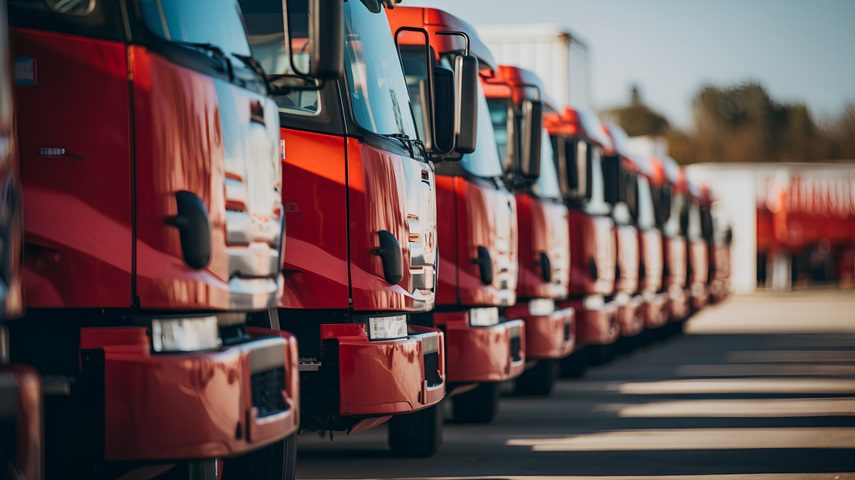
According to data from the European Vehicle Manufacturers’ Association (ACEA), the recession has affected almost all major markets. The exception turned out to be Poland, which strengthened its position, moving up to third place in Europe in terms of the number of vehicles registerd.
Major markets under pressure
The two largest truck markets in Europe recorded the strongest declines in sales. In Germany, 57,434 trucks were registered between January and September 2025, which is 17.9 percent less than a year earlier (69,982 units). In France, the number of registrations fell from 38,371 to 33,222 vehicles, a decrease of 13.4 percent year-on-year.
The countries of southern Europe fared slightly better. In Italy, 20,823 trucks were registered compared to 22,630 a year earlier (a decrease of 8 percent), while in Spain 20,927 vehicles were registered compared to 22,725 in 2024, i.e. 7.9 percent less.
Poland improves its position
Poland stands out against the background of falling volumes in Europe. In the first three quarters of 2025, 21,695 new trucks were registered in our country, which means an increase of 3.4 percent compared to 20,991 vehicles a year earlier. Better sales results have made Poland, so far the fifth market in the European Union, overtake France and Spain, taking third place in Europe in terms of sales volume.
Poland is in a narrow group of EU countries where the truck market in the first three quarters of 2025 was larger than a year earlier. Increases were also recorded in Cyprus, Estonia, Denmark, Latvia, Sweden and Lithuania.
Lithuania stands out in particular, where 8,900 trucks were registered in the period January-September 2025, compared to 4,900 a year earlier. This means an increase of as much as 81 percent year-on-year, which confirms the dynamic development of Lithuanian transport companies despite the pan-European downturn.
Market structure
The heaviest vehicles dominate the market structure. It was this segment that recorded a smaller decrease in registrations than medium seized trucks. The number of registrations of the heaviest vehicles decreased by 9 percent year-on-year, while in the middle segment the decrease was 13.5 percent. The heaviest trucks accounted for 83 percent of all new registrations in Europe.
The slowdown is also visible in the commercial vehicle market. In the first nine months of 2025, 1.074,000 vans were registered in Europe, which is 8.2 percent less than in the same period of 2024. The largest markets were again under pressure. In France, sales fell by 8.3 percent, in Germany by 6 percent, and in Italy by 6.1 percent.
Against the background of these results, Spain stands out positively, where in the period January-September 2025 the number of registrations of commercial vehicles increased by more than 13 percent year-on-year. Belgium, ranked fifth in the European ranking, also recorded solid growth, with a result 12.8 percent better.
Poland in the black twice
As in the truck segment, Poland also recorded an increase in sales on the commercial vehicle market in 2025. In the first three quarters of 2025, 49.200 vans were registered, which means an increase of 2.3 percent compared to the same period of 2024.
A higher number of new truck registrations in Poland in the first three quarters of 2025 may increase the export potential of transport and logistics services in the long term. In 2024, transport services accounted for about 27 percent of the value of total exports of Polish services. (Tygodnik Gospodarczy PIE, 40/2025).
Decarbonization vs. diesel
Despite ambitious announcements and strong regulatory pressure, the process of decarbonising road transport is still progressing slowly. During the first three quarters of 2025, diesel trucks accounted for more than 210 thousand new registrations, or 93.5 percent of the entire market. At the same time, their sales were 11.5 percent lower than a year earlier, which means that the rate of decline was higher than the overall decline in the market.
The van segment is also dominated by diesel-powered vehicles, but decarbonization is progressing faster than in the case of trucks. In the period of Q1–Q3. By 2025, electric vehicles accounted for just over 10 percent of all vans sold in Europe.
The share of electric vehicles is gradually increasing, but it still remains marginal. In the period January-September 2025, electric trucks accounted for 3.8 percent of new sales, compared to 2.1 percent a year earlier. More than two-thirds of all electric truck registrations were in Germany, the Netherlands and France.
Source: Polski Instytut Transportu Drogowego, November 2025

- Everything
- News (325)
- Events (182)
- Get Support (83)
-

"ALIVE" SPÓŁKA Z OGRANICZONĄ ODPOWIEDZIALNOŚCIĄ
VehiclesAutomotive industryCombustion engines, motors and parts thereofLocomotives, rolling stock, special vehicles and parts thereofElectric engines and batteriesAerospace industryTiresVehicle parts (excluding engines)Show allShow more Show lessAliff is a Polish company specializing in the design and production of special vehicle bodies, mobile modules, and dual-use solutions for defence, civil protection, and critical infrastructure sectors. We focus on pickup conversions, modular systems, power integration, and advanced technologies, combining strong manufacturing experience with modern engineering and operational design.

EVOTEC SPÓŁKA Z OGRANICZONĄ ODPOWIEDZIALNOŚCIĄ
Show more Show lessEVOTEC is a lead Polish manufacturer of protective covers for industrial robots and equipment operating in demanding environment. We support companies worldwide by reducing downtime and improving long-term equipment reliability by shielding robots and machines from contamination, heat impact, mechanical wear and other harmful factors. Our solutions are used across automotive, aerospace, food, and other industries where robots face challenging conditions.

ARONPHARMA SPÓŁKA Z OGRANICZONĄ ODPOWIEDZIALNOŚCIĄ
Biotechnology and pharmaceuticsShow allShow more Show lessAronPharma, founded in 2018 in Gdańsk, Poland, develops advanced, science-driven nutraceuticals. With an in-house R&D team, we conduct stability and microelement studies to ensure safety and efficacy. Our portfolio includes innovative liposomal vitamins, berry extracts, and targeted formulas such as Forminol, Retico, Berroxin, and B-pac Sport Nutrition, supporting metabolic health, vision, immunity, and athletic performance.
-
-
-